




15 Music Store Promotion Ideas To Try Today
Today’s young musicians don’t just want to play music — they want to produce it.
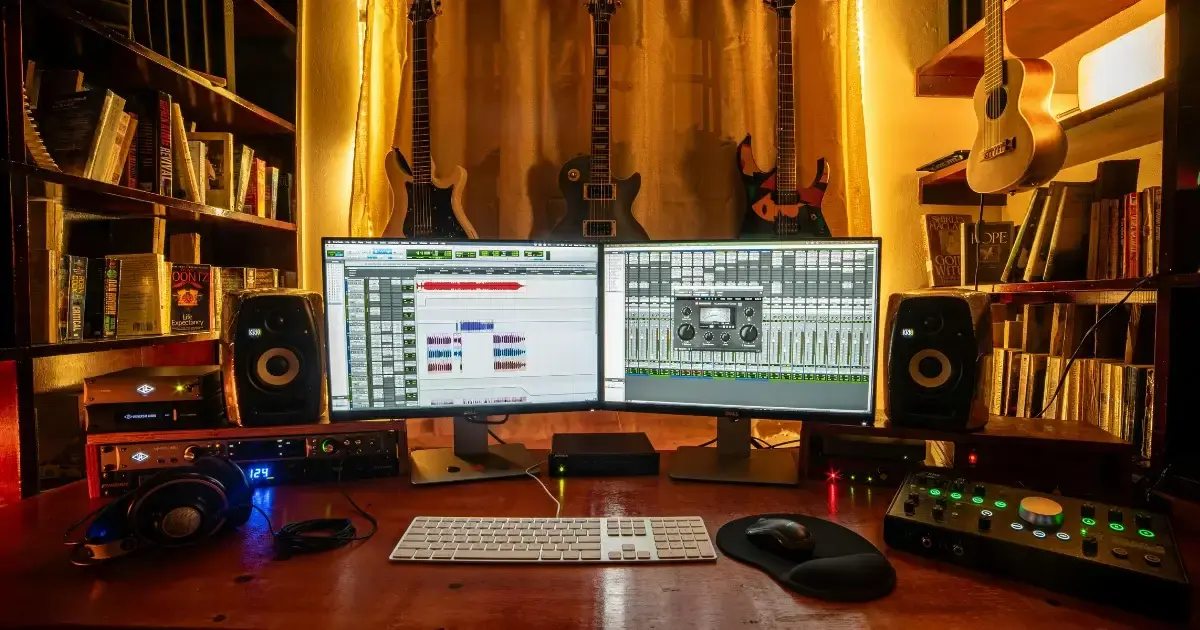
Digital tools have changed the starting point. Where many beginners once picked up a guitar or sat down at a piano, students are now just as likely to open a digital audio workstation (DAW) and start building beats with a MIDI keyboard.
That doesn’t mean music lessons are going anywhere — it means they’re evolving. Adding digital music production to your course offerings helps your store meet students where they are and opens the door to a new generation of musicians.
With the right equipment, strategic marketing, and topics that speak to the younger generation, your music lessons can grow alongside your audience.
What You Need To Teach Digital Music Production
Before you start teaching students about music production, make sure you’re properly equipped.
Here are the essentials:
- Basic audio equipment: Microphones, headphones, and speakers are the foundation of any production setup.
- DAW: Download software for recording, editing, and mixing music. Popular options include GarageBand, Logic Pro, Ableton, and FL Studio.
- Controllers: These are physical audio input devices that connect to your software. Pad controllers have buttons for creating drum beats, and a MIDI keyboard controller acts as a small, portable piano.
- Soundproofing setup: Foam panels and other sound-dampening materials keep lesson noise contained to its own space.
Another important tool is a point of sale (POS) system that can help you manage courses. Some providers offer features like online appointment booking, scheduling, and instructor management.
What you stock depends on the courses you decide to offer. Start with one or two classes and the essentials, then invest in more equipment as demand grows.
Related Read: My Music Staff: The Integration Your Music Store Needs
4 Lesson and Workshop Ideas for the Digital Music Generation
The best courses for your store are the ones your students actually want to take. As digital music production becomes more accessible, here are a few class ideas worth adding to your lineup.
1. Recording Basics Workshop
A recording basics workshop works equally well as a one-on-one lesson or a group session. Set each student up with a DAW and a microphone — or have them share if needed — and start with the fundamentals: how the interface works, key concepts like levels and gain, and basic mic technique for capturing clear audio.
From there, let students record a short clip of their own voice or an instrument and walk them through saving and exporting the file. It’s a natural moment to mention what they can do next — and a great opportunity to introduce more advanced courses you offer.
To promote the workshop, tap into your existing customer base. Because they’ve already purchased instruments from you, messaging like “you already play — learn how to record” hits close to home. A small discount in the email doesn’t hurt either.
2. Intro to Music Production Software
GarageBand is a natural starting point — it’s beginner-friendly and widely available on Mac and Apple mobile devices. If your setup runs on PCs, FL Studio or Audacity are solid alternatives that cover the same ground.
This course works well as a multi-week series, giving each student time to build a short beat or song of their own. Cover the essentials — loops, tempo, MIDI keyboards, and virtual instruments — and let hands-on time with the software do the heavy lifting. The more students work inside a DAW, the more intuitive music production becomes.
A short video on your store’s YouTube channel goes a long way. Demonstrate a simple skill from the curriculum, like adding a drum loop or vocal effect, and end by letting viewers know where and how to sign up.
Related Read: Teaching Revenue Reality: Are Music Lessons Actually Profitable?
3. Beat-Making for Beginners
Beat-making is one of the most popular entry points for younger students, particularly those drawn to hip-hop and trap-style music. A beginner course built around a program like Ableton gives them a structured way to develop that interest.
Rhythm programming is a key element of beat-making. While some students prefer a physical drum kit, most use a pad controller to input sounds digitally. Start with the core drum sounds — kick, snare, hat, and swing — and build from there.
Once students are comfortable with the basics, move into layering, adding lyrics, and getting the levels and mix right.
Students who enjoy this class are prime candidates for gear purchases. Stocking pad controllers and other course-related equipment gives them a clear path to keep practicing at home — and gives your store an easy upsell opportunity.
To get the word out, reach out to a local hip-hop or DJ event and ask about setting up a booth. It’s a direct line to your target audience and a low-pressure setting to talk about what the course covers and how to sign up.
4. Traditional Instruments, Modern Recording
Traditional instrument courses and music production classes don’t have to be separate offerings. Modernizing guitar, violin, or drum courses to include recording techniques gives students a more complete musical education.
During a guitar lesson, for example, you might spend the first 20 minutes teaching a riff, then show students how to record it, loop it, and layer in other digital instruments to build a full song. It’s a small addition to the curriculum that opens up a much larger creative world.
To market this course, ask a local school band if you can give a presentation. Position it as a natural next step for students who already play an instrument and want to learn skills they won’t pick up in school.
Modernize Music Lessons With Music Shop 360
Expanding your lesson offerings to include digital music production helps you stay current with where the industry is heading and opens the door to a new revenue stream. With the right hardware, software, and curriculum, you can reach students who would never sign up for a traditional course.
To deliver a great experience, you need a system that handles the logistical side of lessons so you can focus on teaching.
Music Shop 360 is a cloud-based POS solution built specifically for music stores. Its integration with My Music Staff lets you offer online sign-up, manage your course schedule, assign instructors, and track student progress — all in one place.
A built-in supplier catalog with thousands of music-related products means you can source equipment for your classes and your shelves without leaving the platform.
Customizable sales reports help you track which courses are most profitable, and general retail features like payment processing, inventory management, and e-commerce keep the rest of your operation running smoothly.
To see what Music Shop 360 can do for your store, schedule a demo today!


Taylor has eight years of experience working closely with music stores, including two as the Music Shop 360 General Manager. His deep industry knowledge helps him develop point of sale solutions that address the unique challenges music stores face. Passionate about music and dedicated to supporting small businesses, Taylor’s mission is to empower music store owners with technology that adapts to evolving consumer shopping habits. "I’m all about giving music retailers the tools to stand toe-to-toe with the big guys. Watching small businesses succeed in this fast-paced world is what makes my job so fulfilling."