Generic POS software doesn’t always match what a music store needs.
Between rentals, the repair bench, lessons, and everything you sell online, a music shop asks a lot more of its POS than a standard retail counter does.
We compare the best music shop POS systems on the market so you don’t have to.
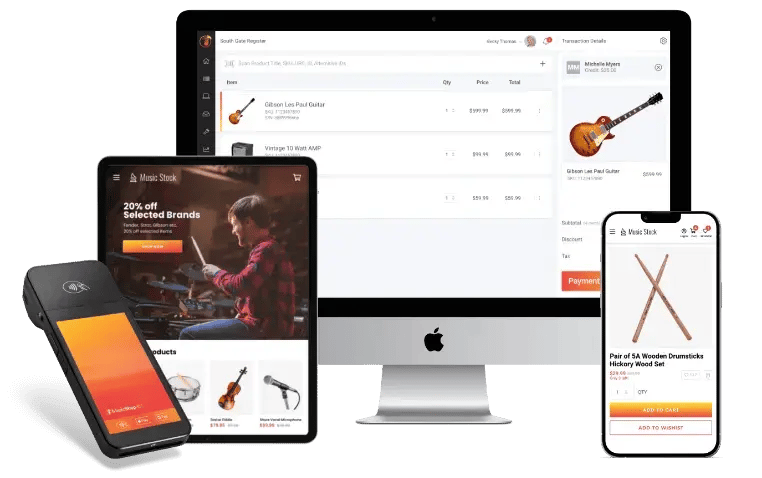


Lightspeed brings powerful inventory and reporting tools to retailers in many industries. For music stores, rentals, lessons, and Reverb listings take add-ons. See the full comparison.

Clover pairs payment processing with sleek countertop and handheld hardware. Instrument rentals, repairs, and trade-ins aren't built in, though. See how it compares.

Shopify offers a strong online store with a POS add-on, but rentals, repairs, and trade-ins all need third-party apps. Compare the details here.
A cloud POS built for independent music retailers, including inventory, rentals, and payments. But the gaps show up in work orders and e-commerce — learn more here.


Tri-Tech’s Windows-exclusive POS software AIMsi, now called AIM, offers rentals, lessons, and repairs as separate add-ons. Here’s how it all stacks up.


